Step into the fascinating world of CNC machining with CNC Machinetools, your go-to source for cutting-edge manufacturing processes in Norwich, UK. Imagine a dance of precision and innovation orchestrated by Computer Numerical Control (CNC) machines, where materials waltz away, leaving behind intricate shapes and designs. In this exploration of CNC machining, we’ll sprinkle in some Norwich charm and unveil the magic that happens when technology meets craftsmanship.
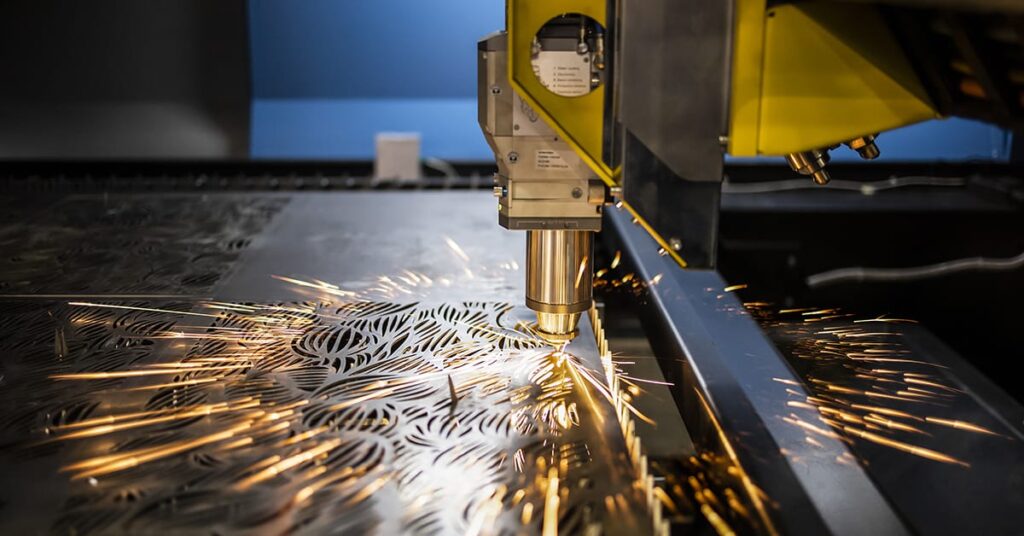
The Evolution of CNC Machining: A Norwich Tale
Picture this – Norwich in the 1940s, where the first numerical control (NC) machines were born. Fast forward to the swinging ’60s, and digital technology takes center stage. Now, here in Norwich, CNC machining emerges, thanks to visionaries like John T. Parsons and Frank L. Stulen from the Massachusetts Institute of Technology (MIT). Their creation, the “Milling Machine No. 1,” not only graced Norwich but also shaped the future of aerospace parts.
Benefits of CNC Machining Over Traditional Techniques in Norwich
Norwich, with its vibrant energy, embraces the speed and accuracy of CNC machining. Our CNC machining services (cnc machining) in Norwich operate round the clock, 24/7, ensuring Norwich’s manufacturing heartbeat never misses a beat. The precision? Tolerances as low as 0.001 inches – a feat even the Norwich Castle would marvel at. Norwich’s craftsmanship meets technology, and the result? Consistent, repeatable, and Norwich-perfect parts.
Norwich’s Love for CNC Machines: Types and Applications
Milling machines waltzing through Norwich’s workshops, lathes crafting cylindrical poetry, and routers etching intricate designs – Norwich’s CNC machines bring diverse talents to the manufacturing stage. Norwich’s automotive, aerospace, and electronics industries owe a tip of the hat to these versatile CNC machines that turn concepts into reality.
Norwich’s Material Wonderland: From Metals to Plastics in CNC Machining
In Norwich, where history and innovation coexist, CNC machining dances with various materials. Metals like steel and aluminum take center stage, showcasing their strength in the Norwich manufacturing saga. Meanwhile, plastics, Norwich’s lightweight darlings, twirl gracefully under CNC machines’ careful guidance. Even composites, the rebels of materials, find a place in Norwich’s aerospace dreams.
Designing Dreams in Norwich: CAD/CAM Software in CNC Machining
Welcome to the design ball in Norwich, where CAD software weaves dreams into digital tapestries. In Norwich, our CNC machining services (cnc machining) transform these digital dreams into reality using Computer-Aided Manufacturing (CAM) software. It’s like a Norwich architect sketching the blueprint of tomorrow’s innovations.
Norwich’s CNC Programming Jive: G-Codes, M-Codes, and Beyond
The CNC programming rhythm echoes through Norwich’s workshops, with G-codes and M-codes choreographing the machine’s every move. In Norwich, our CNC machines speak this language fluently, turning the digital instructions into tangible masterpieces. It’s a Norwich dance where precision meets programming finesse.
Precision Ballet in Norwich: Tolerances and Accuracy in CNC Machining
Norwich knows the importance of precision. CNC machining here means hitting tolerances as low as 0.001 inches, ensuring each part pirouettes to perfection. Accuracy, the star of Norwich’s CNC machining show, demands meticulous planning, flawless programming, and the right CNC machine calibration.
Quality Control Waltz in Norwich: Inspecting Excellence
In Norwich, where quality is non-negotiable, CNC machining undergoes rigorous inspections. Dimensional dances with calipers and CMMs ensure perfection, while visual inspections catch any surface missteps. Norwich’s commitment to quality is not just a performance – it’s a legacy.
Norwich’s CNC Machining: Trends and Innovations
Norwich doesn’t shy away from trends. Automation and robotics amplify productivity in Norwich’s CNC machining realm. The marriage of 3D printing and CNC machining creates a symphony of intricate designs. Norwich’s CNC machining embraces software and simulation tools, reducing errors and enhancing efficiency.
Norwich’s Ode to CNC Machining
In the heart of Norwich, CNC Machinetools is more than a machining service – it’s a journey through time and technology. CNC machining’s evolution, Norwich’s love affair with precision, the diverse materials dancing under Norwich’s skies, and the future trends – it’s all part of Norwich’s ode to manufacturing. As CNC machining continues to shape Norwich’s industrial dreams, CNC Machinetools stands at the forefront, orchestrating the future of manufacturing in Norwich, UK.
CNC machining, or Computer Numerical Control machining, is a manufacturing process that utilizes computerized controls and machine tools to remove material from a workpiece to create a desired shape or design. This technology has revolutionized the manufacturing industry, allowing for increased efficiency, precision, and productivity. In this article, we will explore the evolution of CNC machining, its benefits over traditional manufacturing techniques, the most common types of CNC machines and their applications, the materials used in CNC machining, the design process, CNC programming, the importance of precision, quality control, and future developments in the field.
The Evolution of CNC Machining: A Brief History
The origins of CNC machining can be traced back to the 1940s when the first numerical control (NC) machines were developed. These early machines used punched cards or tapes to control the movement of the machine tools. However, it wasn’t until the 1950s and 1960s that the technology began to advance significantly. The introduction of computers and digital technology allowed for more complex and precise control of the machines.
One of the key milestones in the history of CNC machining was the development of the first CNC machine tool in the late 1950s. This machine, known as the “Milling Machine No. 1,” was developed by John T. Parsons and Frank L. Stulen at the Massachusetts Institute of Technology (MIT). It used punched cards to control the movement of the machine and was used to produce complex aircraft parts.
Another important milestone was the development of the first CNC lathe in the early 1950s by John T. Parsons and his team. This machine, known as the “Tracer Controlled Lathe,” used a hydraulic tracer to control the movement of the cutting tool. It was used to produce complex shapes and contours.
The Benefits of CNC Machining over Traditional Manufacturing Techniques
CNC machining offers several advantages over traditional manufacturing techniques. One of the main advantages is speed. CNC machines can perform tasks much faster than manual machines, resulting in increased productivity and shorter lead times. Additionally, CNC machines can operate continuously, 24 hours a day, 7 days a week, further increasing efficiency.
Another advantage of CNC machining is accuracy. CNC machines are capable of producing highly precise and consistent parts, with tolerances as low as 0.001 inches. This level of accuracy is difficult to achieve with manual machines. CNC machines also have the ability to repeat the same operation multiple times, ensuring consistent results.
CNC machining also offers greater flexibility and versatility compared to traditional manufacturing techniques. With CNC machines, it is possible to produce complex shapes and designs that would be difficult or impossible to achieve with manual machines. CNC machines can also work with a wide range of materials, including metals, plastics, and composites.
The Most Common Types of CNC Machines and Their Applications
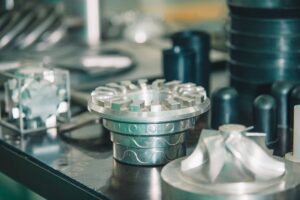
There are several different types of CNC machines, each with its own specific applications. One of the most common types is the milling machine. Milling machines use rotary cutters to remove material from a workpiece, creating a desired shape or design. They are commonly used in the automotive, aerospace, and electronics industries.
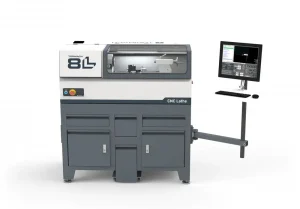
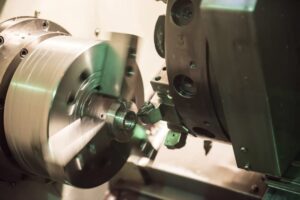
Another common type of CNC machine is the lathe. Lathes are used to rotate a workpiece while a cutting tool removes material from the surface. They are often used to produce cylindrical or conical shapes, such as shafts or threads. Lathes are commonly used in the manufacturing of automotive parts, medical devices, and precision instruments.
Routers are another type of CNC machine that is widely used in the woodworking and cabinetry industries. Routers use spinning cutting tools to remove material from a workpiece, creating intricate designs and patterns. They are often used to produce furniture, cabinets, and decorative items.
Materials Used in CNC Machining: From Metals to Plastics and More
CNC machining can work with a wide range of materials, including metals, plastics, composites, and even ceramics. Each material has its own unique properties and characteristics that can affect the machining process.
Metals are one of the most commonly used materials in CNC machining. They are strong, durable, and have excellent heat resistance. Common metals used in CNC machining include aluminum, steel, brass, and titanium. Each metal has its own specific properties, such as hardness, conductivity, and corrosion resistance, which must be taken into account when machining.
Plastics are another popular material in CNC machining. They are lightweight, flexible, and have excellent electrical insulation properties. Common plastics used in CNC machining include acrylic, polycarbonate, nylon, and PVC. Plastics can be machined using a variety of techniques, including milling, turning, and routing.
Composites are a combination of different materials, such as fibers and resins, that are bonded together to create a stronger and more durable material. They are commonly used in industries such as aerospace, automotive, and sports equipment. Composites can be challenging to machine due to their varying properties and the potential for delamination or fiber pullout.
The Design Process: How CAD/CAM Software is Used to Create CNC Programs
The design process for CNC machining begins with the creation of a digital model or design using computer-aided design (CAD) software. CAD software allows designers to create 2D or 3D models of the desired part or component. These models can then be manipulated, modified, and optimized before being sent to the CNC machine for production.
Once the design is complete, computer-aided manufacturing (CAM) software is used to generate the CNC program. CAM software takes the digital model and converts it into a series of instructions that the CNC machine can understand and execute. These instructions include information about tool paths, cutting speeds, feed rates, and other parameters.
The CNC program is then loaded into the CNC machine, either directly or via a computer network. The machine reads the program and uses it to control the movement of the machine tools and the cutting process. The operator can monitor the progress of the machining operation and make any necessary adjustments or modifications.
Understanding CNC Programming: G-Codes, M-Codes, and Beyond
CNC programming is the process of creating a set of instructions, known as G-codes and M-codes, that control the movement and operation of the CNC machine. G-codes are used to control the movement of the machine tools, such as the cutting tool or the workpiece. M-codes are used to control auxiliary functions, such as coolant flow or tool changes.
G-codes and M-codes are standardized across the industry, allowing CNC programs to be easily transferred between different machines and manufacturers. However, each machine may have its own specific set of codes and parameters that need to be taken into account when programming.
In addition to G-codes and M-codes, there are also other types of codes used in CNC programming, such as T-codes for tool selection, F-codes for feed rates, and S-codes for spindle speed. These codes provide additional information and control over the machining process.
The Importance of Precision in CNC Machining: Tolerances and Accuracy
Precision is of utmost importance in CNC machining. Tolerances, which are the allowable variations in dimensions, are specified for each part or component. Achieving the desired tolerances requires careful planning, programming, and execution.
Tolerances can vary depending on the application and the requirements of the part. For example, aerospace and medical industries often require very tight tolerances, while other industries may have more lenient requirements. CNC machines are capable of achieving tolerances as low as 0.001 inches, but achieving such precision requires careful calibration and setup.
Accuracy is another important aspect of CNC machining. Accuracy refers to how closely the actual dimensions of the finished part match the intended dimensions. Achieving accuracy requires not only precise programming and machining but also proper tool selection, machine calibration, and quality control.
Quality Control in CNC Machining: Inspection Techniques and Tools
Quality control is an essential part of the CNC machining process. It ensures that the finished parts meet the specified requirements and are free from defects or errors. There are several inspection techniques and tools used in CNC machining to ensure quality.
One common inspection technique is dimensional inspection, which involves measuring the dimensions of the finished part using precision measuring tools such as calipers, micrometers, and coordinate measuring machines (CMMs). These tools can measure dimensions with high accuracy and provide detailed reports on the part’s conformance to specifications.
Another inspection technique is visual inspection, which involves visually inspecting the finished part for any defects or surface imperfections. This can be done manually or with the help of automated vision systems that use cameras and image processing algorithms to detect defects.
In addition to dimensional and visual inspection, there are also non-destructive testing (NDT) techniques that can be used to inspect the integrity of the part without damaging it. These techniques include ultrasonic testing, radiographic testing, and magnetic particle testing.
Future Developments in CNC Machining: Trends and Innovations to Watch Out For
The field of CNC machining is constantly evolving, with new technologies and innovations being introduced regularly. One of the key trends in CNC machining is the integration of automation and robotics. This allows for increased productivity, reduced labor costs, and improved safety.
Another trend is the use of additive manufacturing, or 3D printing, in conjunction with CNC machining. This combination allows for the production of complex parts with intricate geometries that would be difficult or impossible to achieve with traditional machining techniques alone.
Advancements in software and simulation tools are also driving innovation in CNC machining. These tools allow for more efficient programming, optimization of tool paths, and simulation of the machining process before it is executed. This reduces the risk of errors and allows for faster and more accurate production.
Conclusion
CNC machining has revolutionized the manufacturing industry, offering increased efficiency, precision, and productivity. It has become an essential tool in various industries, from automotive and aerospace to electronics and medical devices. The evolution of CNC machining, its benefits over traditional manufacturing techniques, the different types of CNC machines and their applications, the materials used, the design process, CNC programming, the importance of precision and quality control, and future developments in the field all contribute to its importance in modern manufacturing. As technology continues to advance, CNC machining will continue to play a crucial role in shaping the future of manufacturing. Find out more about what we offer here at CNC Machinetools.