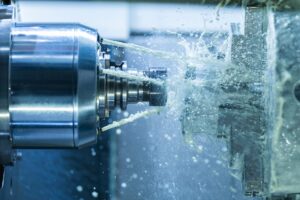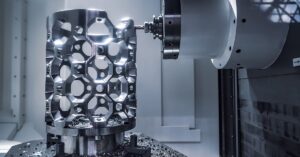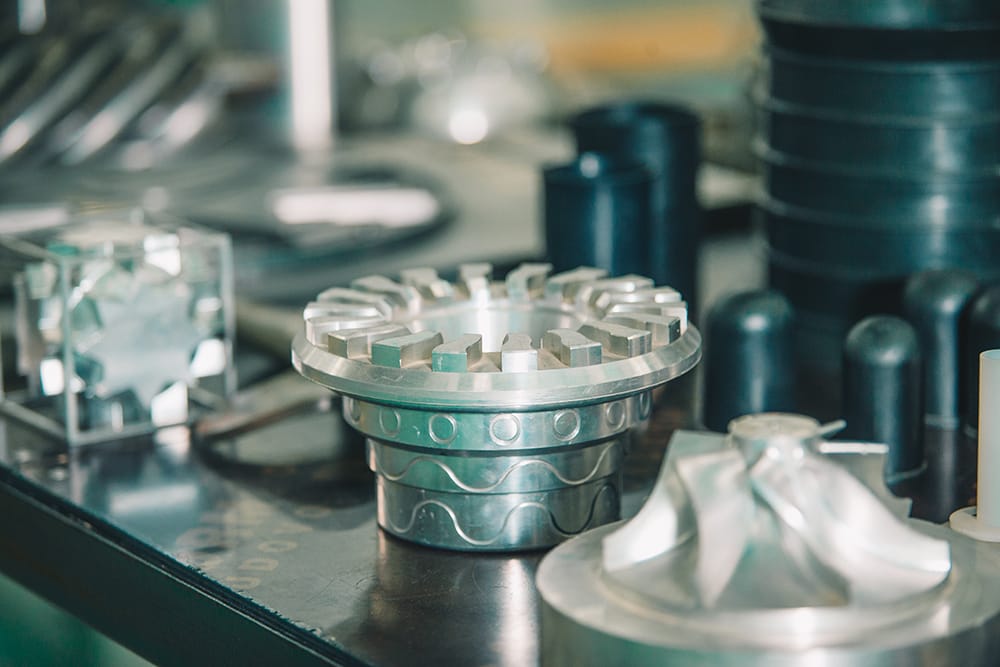
CNC tooling services involve the utilisation of computer numerical control (CNC) machines for the fabrication and production of diverse tools and components. These services have significantly transformed the manufacturing sector by offering accurate and effective solutions across various applications. Dating back to the 1940s, CNC tooling services have a rich history, coinciding with the development of the first CNC machines. Subsequent technological advancements have propelled the evolution of increasingly sophisticated and precise CNC machines, establishing them as indispensable elements within contemporary manufacturing workflows.
The Benefits of CNC Tooling Services for Manufacturing
CNC tooling services offer several key advantages that significantly enhance manufacturing processes. One such benefit is the heightened precision and accuracy they provide. Unlike traditional manual machining techniques, CNC machines operate with programmed instructions, ensuring consistent and precise outcomes. This level of precision is particularly critical in industries like aerospace, automotive, and medical, where even minor deviations can yield significant repercussions.
Moreover, CNC tooling services facilitate faster production times. These machines operate at significantly higher speeds compared to manual methods, enabling swift turnaround times and heightened production capacities. This attribute proves particularly advantageous for enterprises operating in industries characterised by high demand or stringent deadlines.
Additionally, CNC tooling services contribute to reduced labor costs. The streamlined nature of CNC operations necessitates fewer personnel compared to traditional manual machining, resulting in cost savings and diminished susceptibility to human error. Consequently, this translates into elevated product quality.
CNC tooling services enhance workplace safety by automating manufacturing processes. This automation reduces workers’ exposure to hazardous materials and potentially risky tasks, thereby mitigating the likelihood of workplace accidents and injuries.
Why is the Quality CNC Tooling so important?
The quality of CNC tooling plays a crucial role in the overall quality of the manufactured products. The choice of tooling materials, design, and maintenance can significantly impact the performance and durability of the final product. Using high-quality tooling materials ensures that the components produced are strong, durable, and resistant to wear and tear.
Quality CNC tooling helps reduce waste and scrap in the manufacturing process. When tooling is not properly designed or maintained, it can lead to errors, defects, and rework. This not only increases production costs but also affects the overall efficiency of the manufacturing process. By investing in quality CNC tooling services, businesses can minimize waste and scrap, resulting in cost savings and improved productivity.
Regular maintenance and replacement of tooling is also essential to ensure optimal performance and longevity. Over time, tooling can wear out or become damaged, affecting the accuracy and precision of the manufacturing process. By regularly inspecting and replacing worn-out tooling, businesses can maintain consistent quality and avoid costly downtime due to machine breakdowns.
How CNC Tooling Services Can Improve Your Manufacturing Process
CNC tooling services have revolutionized the manufacturing process in various industries. One example is in the automotive industry, where CNC machines are used to produce complex components with high precision and accuracy. This has led to improved vehicle performance, increased fuel efficiency, and enhanced safety features.
Another example is in the aerospace industry, where CNC tooling services are used to manufacture critical components for aircraft. The precision and accuracy offered by CNC machines ensure that these components meet strict safety standards and perform reliably under extreme conditions.
CNC tooling services also have the potential to drive innovation and product development. With the ability to produce complex shapes and designs, businesses can explore new possibilities in terms of product functionality and aesthetics. This opens up opportunities for businesses to differentiate themselves in the market and offer unique solutions to their customers.
The Role of CNC Tooling in Precision Manufacturing
Precision is a critical factor in manufacturing, especially in industries such as electronics, medical devices, and optics. CNC tooling plays a crucial role in achieving the required level of precision in these industries. By using CNC machines, businesses can produce components with tight tolerances and intricate designs, ensuring that they meet the exact specifications and requirements.
CNC tooling also allows for the production of complex geometries that would be difficult or impossible to achieve with traditional machining methods. This is particularly beneficial in industries such as mold making and prototyping, where intricate designs are often required. CNC machines can accurately reproduce these designs, resulting in high-quality and precise components.
CNC tooling services offer the advantage of repeatability. Once a program is created for a specific component, it can be easily replicated multiple times with consistent precision and accuracy. This is particularly important in industries that require mass production or the production of identical components.
CNC Tooling for High-Volume Production
CNC tooling services offer several advantages for high-volume production. One of the key advantages is increased efficiency and productivity. CNC machines are capable of running continuously for extended periods, resulting in higher production rates and reduced downtime. This allows businesses to meet high-demand requirements and maximize their output.
Also, CNC tooling services enable businesses to produce large quantities of products quickly and accurately. With the ability to automate the manufacturing process, businesses can achieve consistent results without sacrificing quality or precision. This is particularly beneficial for businesses that operate in industries with high-volume demands, such as consumer electronics or packaging.
CNC tooling services offer cost savings for high-volume production. By automating the manufacturing process, businesses can reduce labor costs and minimize the risk of human error. This not only improves efficiency but also reduces the need for rework or scrap, resulting in cost savings and increased profitability.
How does CNC Tooling change Productivity and Efficiency
CNC tooling has had a significant impact on productivity and efficiency in the manufacturing industry. One example is in the production of complex components, where CNC machines can perform multiple operations in a single setup. This eliminates the need for manual intervention and reduces the time required to produce each component. As a result, businesses can achieve higher production rates and meet tight deadlines.
Another example is in the reduction of setup times. CNC machines can store multiple programs and tooling setups, allowing for quick and easy changeovers between different components or products. This eliminates the need for manual adjustments and reduces downtime, resulting in increased productivity and efficiency.
CNC tooling services also contribute to improved accuracy and consistency in the manufacturing process. By eliminating human error and variability, businesses can achieve consistent results with minimal deviation. This not only improves product quality but also reduces the need for rework or scrap, resulting in cost savings and increased efficiency.
The Future of CNC Tooling in Manufacturing
The future of CNC tooling in manufacturing looks promising, with emerging trends and advancements in technology. One of the key trends is the integration of artificial intelligence (AI) and machine learning into CNC machines. This allows for real-time monitoring and optimization of the manufacturing process, resulting in improved efficiency and productivity.
Another trend is the development of hybrid machines that combine additive manufacturing (3D printing) with CNC machining. This allows for the production of complex components with intricate geometries that would be difficult or impossible to achieve with traditional machining methods alone. This opens up new possibilities for product design and customization.
Advancements in tooling materials and coatings are expected to improve the performance and durability of CNC tooling. New materials such as ceramic composites and diamond coatings offer enhanced wear resistance and thermal stability, allowing for longer tool life and improved machining performance.