When it comes to cutting slots or shaping materials, machinists often reference milling machines as their go-to tool. However, the term “milling machine” encompasses a variety of types—around ten, to give you an idea. Each type serves distinct purposes and is selected based on specific machining needs. Understanding these different milling machines is crucial for anyone interested in manufacturing or machining.
1. Vertical Milling Machine
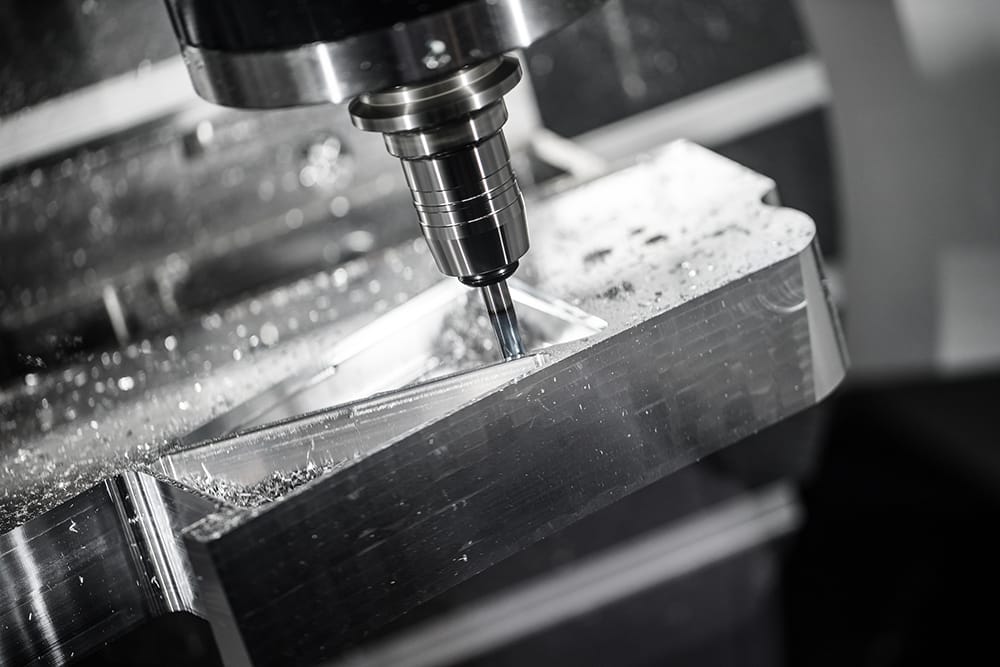
The vertical milling machine is the most widely used type, featuring a vertical spindle that holds various cutting tools like end mills and face mills. This machine excels at machining grooves, slotting keyways, and producing flat surfaces. Its worktable typically moves horizontally and can also move in and out, providing versatility for different operations. Prices for vertical mills can range significantly, from $6,000 for a basic desktop CNC machine to upwards of $500,000 for advanced 5-axis machining centres.
2. Horizontal Milling Machine
Often referred to as a plain milling machine, the horizontal milling machine has a spindle positioned parallel to the worktable. This setup allows for larger and heavier workpieces, making it ideal for heavy-duty roughing operations. Like vertical mills, horizontal milling machines also operate along three axes, and many are CNC-equipped. Prices for new machines generally start around $150,000, while used options can vary from a few hundred dollars to several thousand.
3. Universal Milling Machine
This machine is celebrated for its versatility, as it can operate both horizontally and vertically. By adding attachments like an indexing head or rotary table, the universal milling machine can perform a wide range of operations. It’s commonly used for producing tooling and other intricate components. The price for a large universal milling machine can be around $130,000 for new models, while used machines fall between $10,000 and $15,000.
4. Vertical Knee Type Milling Machine
Also known as turret mills, these machines are recognised for their flexibility. The rotary cutting tools remove material from the workpiece while the workpiece remains stationary. Vertical knee mills are easy to operate and can function as drill presses as well. A new standard vertical knee mill may cost around $27,000, whereas a CNC version is priced around $13,500.
5. Bed Type Milling Machines
In bed-type milling machines, the worktable is fixed and allows for longitudinal movement, while the vertical spindle provides the Z-axis movement. These machines are more rigid compared to knee mills, making them suitable for larger projects. The construction similarities with vertical mills often lead to confusion, but they serve different purposes.
6. CNC Milling Machine
CNC (computer numerical control) milling machines automate the machining process, offering increased speed and precision. These machines can operate on multiple axes, allowing for complex designs ideal for industries like aerospace. Prices vary widely, with CNC Bridgeport-type mills under $15,000, while advanced multi-axis tools can reach up to $500,000.
7. Tracer Controlled Milling Machine
Tracer mills were once common in metal pattern shops, utilising a stylus to replicate patterns from a physical model. However, these machines have largely been replaced by CNC technology, which can achieve similar results with greater efficiency. The reduced demand means you can often find tracer mills at lower prices, sometimes just a few hundred dollars.
8. Column Milling Machines
Column milling machines encompass a variety of machines, including both vertical and horizontal types. The column serves as the main support and houses the driving mechanisms for both the spindle and the table feed. These machines are versatile and can be employed in various industries, with prices that can range widely.
9. Duplex Milling Machine
A duplex milling machine consists of two machines positioned opposite one another, allowing for simultaneous machining of a workpiece with two spindles. These machines can function either as individual units or together, depending on the operation’s requirements.
10. Rotary Table Milling Machine
Rather than being a standalone machine, a rotary table is an attachment used with milling machines to enable precise positioning or to facilitate the cutting of round shapes. This versatile tool can be mounted in different orientations and operated either manually or via CNC control.