Advanced machine tools have revolutionized the manufacturing industry, allowing for increased efficiency, precision, and productivity. These cutting-edge technologies have transformed the way products are made, enabling manufacturers to stay competitive in a rapidly evolving global market. It is crucial for companies to stay up-to-date with the latest technological advancements in order to remain at the forefront of the industry and meet the demands of customers.

The Role of Robotics and Automation in Modern Manufacturing
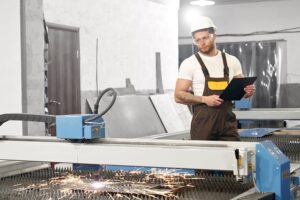
Robotics and automation play a vital role in modern manufacturing processes. These technologies involve the use of robots and automated systems to perform tasks that were previously done by humans. By automating repetitive and mundane tasks, manufacturers can increase productivity, reduce costs, and improve overall efficiency.
One of the key benefits of robotics and automation is their ability to perform tasks with a high level of precision and accuracy. This is particularly important in industries such as automotive manufacturing, where even the slightest error can have significant consequences. Robots can perform tasks such as welding, painting, and assembly with unparalleled precision, resulting in higher quality products.
Furthermore, robotics and automation can also improve workplace safety by taking over hazardous tasks that may put human workers at risk. For example, robots can handle heavy lifting or work in environments with high temperatures or toxic substances. This not only protects workers from potential harm but also reduces the likelihood of accidents and injuries.
How 3D Printing is Changing the Manufacturing Landscape
3D printing, also known as additive manufacturing, is a revolutionary technology that has transformed the manufacturing landscape. Unlike traditional subtractive manufacturing methods, which involve removing material from a solid block to create a desired shape, 3D printing builds objects layer by layer using digital designs.
One of the key advantages of 3D printing is its ability to create complex geometries that would be difficult or impossible to achieve using traditional manufacturing methods. This opens up new possibilities for design innovation and customization. For example, in the medical field, 3D printing has been used to create patient-specific implants and prosthetics that perfectly fit the individual’s anatomy.
Additionally, 3D printing can significantly reduce waste compared to traditional manufacturing methods. With traditional methods, excess material is often discarded, resulting in high material costs and environmental impact. In contrast, 3D printing only uses the exact amount of material needed to create the object, minimizing waste and reducing costs.
Numerous industries have embraced 3D printing technology. In aerospace, for example, 3D printing is used to create lightweight and complex components that improve fuel efficiency and reduce emissions. In the fashion industry, designers are using 3D printing to create unique and customizable clothing and accessories. The possibilities are endless, and as the technology continues to advance, we can expect to see even more industries adopting 3D printing in their manufacturing processes.
The Advantages of CNC Machining in Production Processes
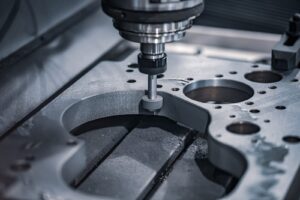
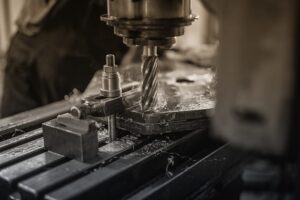
CNC (Computer Numerical Control) machining is a manufacturing process that utilizes computer-controlled machines to produce precise and complex parts. This technology has revolutionized the manufacturing industry by allowing for high levels of automation and accuracy.
One of the key benefits of CNC machining is its ability to produce parts with a high level of precision and consistency. The computer-controlled machines can follow complex instructions with extreme accuracy, resulting in parts that meet tight tolerances. This is particularly important in industries such as aerospace and automotive, where precision is crucial for safety and performance.
CNC machining also offers a high level of flexibility and versatility. The machines can be programmed to produce a wide range of parts, from simple to complex geometries. This allows manufacturers to quickly adapt to changing customer demands and produce customized products efficiently.
Furthermore, CNC machining can significantly reduce production time compared to traditional manufacturing methods. Once the machine is programmed, it can work continuously without the need for manual intervention. This not only increases productivity but also reduces labor costs and improves overall efficiency.
Numerous industries rely on CNC machining technology. In the medical field, CNC machines are used to produce surgical instruments and implants with high precision. In the electronics industry, CNC machining is used to create intricate circuit boards and components. The versatility and accuracy of CNC machining make it an essential tool in modern manufacturing processes.
The Use of Nanotechnology in Manufacturing
Nanotechnology involves the manipulation of matter at the atomic and molecular scale to create new materials and devices with unique properties. In the manufacturing industry, nanotechnology has the potential to revolutionize production processes by enabling the development of advanced materials, coatings, and sensors.
One of the key advantages of nanotechnology in manufacturing is its ability to enhance the properties of materials. By manipulating materials at the nanoscale, scientists can create materials with improved strength, durability, and conductivity. This opens up new possibilities for developing lightweight and high-performance products.
Nanotechnology also offers the potential for self-cleaning and self-healing materials. For example, nanocoatings can be applied to surfaces to repel dirt and water, making them easier to clean. Additionally, nanomaterials can be designed to have self-healing properties, allowing them to repair minor damages without human intervention.
Furthermore, nanotechnology enables the development of sensors with unprecedented sensitivity and accuracy. These sensors can be used to monitor various parameters such as temperature, pressure, and humidity in real-time, allowing for better control and optimization of manufacturing processes.
Numerous industries are already utilizing nanotechnology in their manufacturing processes. In the automotive industry, for example, nanocoatings are used to improve the durability and corrosion resistance of car bodies. In the electronics industry, nanomaterials are used to develop smaller and more efficient electronic components. As nanotechnology continues to advance, we can expect to see even more applications in various industries.
The Importance of Data Analytics in Manufacturing Operations
Data analytics plays a crucial role in modern manufacturing operations. By collecting and analyzing large amounts of data, manufacturers can gain valuable insights into their processes, identify areas for improvement, and make data-driven decisions.
One of the key benefits of data analytics in manufacturing is its ability to optimize production processes. By analyzing data from various sources such as sensors, machines, and production lines, manufacturers can identify bottlenecks, inefficiencies, and areas of waste. This allows them to make targeted improvements and increase overall productivity.
Data analytics also enables predictive maintenance, which can significantly reduce downtime and maintenance costs. By analyzing data from sensors and machines, manufacturers can detect early signs of equipment failure and schedule maintenance before a breakdown occurs. This not only minimizes unplanned downtime but also extends the lifespan of equipment.
Furthermore, data analytics can improve product quality by identifying patterns and trends that may affect the final product. By analyzing data from various stages of the production process, manufacturers can detect deviations from the desired specifications and take corrective actions in real-time. This ensures that only high-quality products reach the market.
Numerous industries are leveraging the power of data analytics in their manufacturing operations. In the food and beverage industry, for example, manufacturers are using data analytics to optimize production processes and ensure food safety. In the pharmaceutical industry, data analytics is used to monitor and control the quality of drugs during manufacturing. The ability to collect and analyze vast amounts of data is transforming the way manufacturers operate and enabling them to stay competitive in a rapidly changing market.
The Integration of Artificial Intelligence in Machine Tools
Artificial intelligence (AI) is revolutionizing machine tools by enabling them to perform complex tasks with a high level of autonomy and intelligence. AI involves the development of computer systems that can perform tasks that would typically require human intelligence, such as perception, reasoning, learning, and decision-making.
One of the key advantages of AI in machine tools is its ability to optimize production processes. By analyzing large amounts of data in real-time, AI systems can identify patterns, trends, and anomalies that may affect the production process. This allows manufacturers to make data-driven decisions and optimize various parameters such as speed, temperature, and pressure to maximize efficiency and quality.
AI also enables predictive maintenance by analyzing data from sensors and machines. By detecting early signs of equipment failure, AI systems can schedule maintenance before a breakdown occurs, minimizing downtime and reducing maintenance costs.
Furthermore, AI can improve the accuracy and precision of machine tools by enabling them to learn from experience. Machine learning algorithms can analyze data from previous production runs and adjust parameters to achieve the desired outcome. This not only improves product quality but also reduces waste and rework.
Numerous industries are embracing AI in their machine tools. In the automotive industry, for example, AI is used to optimize manufacturing processes and improve product quality. In the semiconductor industry, AI is used to control complex manufacturing processes with high precision. As AI continues to advance, we can expect to see even more applications in various industries.
The Future of Additive Manufacturing in Industrial Applications
Additive manufacturing, also known as 3D printing, is poised to revolutionize industrial applications by enabling the production of complex parts with unprecedented speed and efficiency. Unlike traditional manufacturing methods that involve subtracting material from a solid block, additive manufacturing builds objects layer by layer using digital designs.
One of the key advantages of additive manufacturing is its ability to create complex geometries that would be difficult or impossible to achieve using traditional methods. This opens up new possibilities for design innovation and customization. For example, in the aerospace industry, additive manufacturing is used to create lightweight and intricate components that improve fuel efficiency and reduce emissions.
Additionally, additive manufacturing offers significant cost savings compared to traditional manufacturing methods. With traditional methods, excess material is often discarded, resulting in high material costs and environmental impact. In contrast, additive manufacturing only uses the exact amount of material needed to create the object, minimizing waste and reducing costs.
Furthermore, additive manufacturing enables on-demand production, eliminating the need for large inventories and reducing lead times. This allows manufacturers to quickly respond to changing customer demands and produce customized products efficiently.
Numerous industries have embraced additive manufacturing technology. In the medical field, for example, additive manufacturing is used to create patient-specific implants and prosthetics that perfectly fit the individual’s anatomy. In the fashion industry, designers are using additive manufacturing to create unique and customizable clothing and accessories. As the technology continues to advance, we can expect to see even more industries adopting additive manufacturing in their industrial applications.
The Impact of Augmented Reality on Manufacturing Processes
Augmented reality (AR) is transforming manufacturing processes by overlaying digital information onto the physical world, enhancing productivity, efficiency, and safety. AR involves the use of wearable devices or mobile applications to provide real-time information and instructions to workers.
One of the key benefits of AR in manufacturing is its ability to provide workers with real-time instructions and guidance. By overlaying digital information onto their field of view, workers can easily follow step-by-step instructions, reducing errors and improving overall efficiency. This is particularly important in industries such as assembly and maintenance, where complex tasks need to be performed accurately.
AR also enables remote collaboration and training. With AR devices, experts can provide guidance and support to workers in real-time, regardless of their physical location. This not only improves productivity but also reduces travel costs and downtime.
Furthermore, AR can enhance workplace safety by providing workers with real-time information about potential hazards or risks. For example, AR devices can highlight dangerous areas or provide warnings when workers are approaching hazardous equipment. This helps prevent accidents and injuries, ensuring a safer working environment.
Numerous industries are leveraging the power of AR in their manufacturing processes. In the automotive industry, for example, AR is used to guide workers during assembly and maintenance tasks. In the aerospace industry, AR is used to assist technicians in complex wiring and inspection procedures. As AR technology continues to advance, we can expect to see even more applications in various industries.
Embracing the Future of Manufacturing with Advanced Machine Tools
Advanced machine tools have transformed the manufacturing industry, enabling companies to increase efficiency, precision, and productivity. It is crucial for manufacturers to stay up-to-date with the latest technological advancements in order to remain competitive in a rapidly evolving global market.
Robotics and automation play a vital role in modern manufacturing processes by increasing productivity, reducing costs, and improving overall efficiency. 3D printing technology has revolutionized the manufacturing landscape by enabling the production of complex geometries and reducing waste. CNC machining offers high levels of precision, flexibility, and productivity, making it an essential tool in modern manufacturing processes.
Nanotechnology has the potential to revolutionize production processes by enabling the development of advanced materials and sensors. Data analytics provides valuable insights into manufacturing operations, optimizing processes and improving product quality. Artificial intelligence enhances machine tools by optimizing production processes and improving accuracy and precision.
Additive manufacturing enables the production of complex parts with unprecedented speed and efficiency, while augmented reality enhances productivity, efficiency, and safety in manufacturing processes.
Embracing these advanced machine tools is essential for manufacturers to stay competitive and meet the demands of customers. The future of manufacturing is bright, with endless possibilities for innovation and customization. By embracing these technologies, manufacturers can unlock new opportunities and drive the industry forward. See what services CNC Machinetools can do: CNC Machine Services.